
Article: How to Care for Your African Outfit | African Tailor UK
How to Care for Your African Outfit | African Tailor UK
You've invested in a beautifully handcrafted piece — an agbada, an Ankara dress, a kaftan, or an occasion outfit made just for you. But bespoke fashion is only as good as the care that goes into keeping it looking sharp. Whether you're working with a tailor in Manchester UK or you've ordered from anywhere else in the world, proper garment care is what keeps your outfit looking new for years, not just for one event.
At Deright Fashion Store, your trusted African tailor based in Manchester, we get asked all the time how to keep bespoke pieces in top condition. Here's our complete guide.
Washing: Know Your Fabric First
Different African fabrics need different care:
- Ankara / Aso-Oke — Hand wash in cold water where possible. Machine washing on a gentle cycle is fine occasionally, but always turn the garment inside out first to protect the print.
- Damask & Lace — Always hand wash. These fabrics are delicate and can snag or lose shape in a machine.
- Adire (tie-dye) — Wash separately for the first few washes, as natural dyes can bleed. Cold water only.
- Agbada & Senator Wear — Dry clean where possible, especially for embroidered pieces, to protect the stitching and beading.
Drying Tips
- Avoid direct sunlight for long periods — bright colours fade faster than you'd expect
- Dry flat or on a padded hanger rather than a thin wire one, which can distort the shoulders
- Never tumble dry embroidered or beaded pieces
Ironing and Steaming
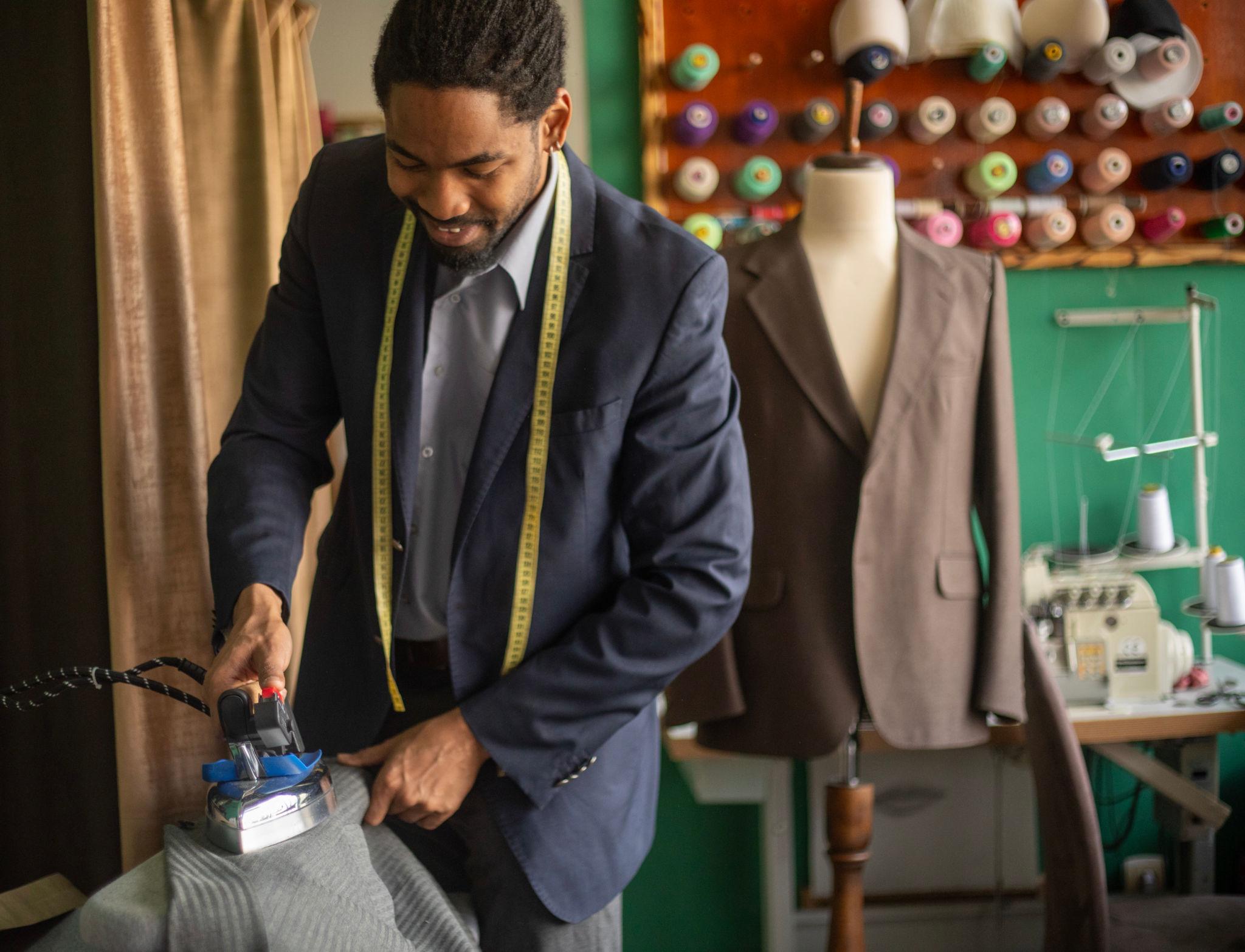
- Always iron on the reverse side, or use a pressing cloth, to protect embroidery and prints
- Use a lower heat setting for delicate fabrics like lace and Adire
- A steamer is often gentler than an iron for structured pieces like agbadas and kaftans
Storage
- Store on padded or wide hangers to keep the shoulder shape
- Use breathable garment bags rather than plastic, which can trap moisture
- Keep beaded or heavily embroidered pieces flat rather than hanging, if possible
- Store away from direct sunlight to prevent fading
Repairs and Alterations
Bespoke garments are made to last, but if a hem comes loose or a button needs replacing, don't wait — small repairs are quick and affordable when caught early. As your African tailor, we're always happy to help with alterations on pieces we've made for you.
Why Proper Care Matters for Bespoke Pieces
Unlike mass-produced ready to wear clothing, your bespoke outfit was cut and sewn specifically for your body and your occasion. Looking after it properly means it stays wearable for years — for the next wedding, the next Owambe, the next celebration.
Need Help With a Repair or New Piece?
As a leading tailor in Manchester UK, we're here for the full lifecycle of your garment — from the first fitting to years of wear. Get in touch if you need advice on caring for a specific fabric, or if you're ready to order something new.
📞 Call or WhatsApp us: 07452831769 🌐 Visit: derightfs.com